Long Le
-
Posted: December 22, 2025Read more »
2025 was a big year for Genius Tools, with strong demand for universal socket systems, impact bit sockets, and professional-grade hand tools. Here’s a look at what customers bought most — and why these tools stood out.
Top Sellers of 2025
· US-206S – 6pc 1/4" Dr. SAE Universal Hand Socket Set
· 282504 – 1/4" Dr. 1/8" Hand Socket
· 3476R02 – 3/8" Dr. #2 Phillips Impact Bit Socket (76mm)
· US-307S – 7pc 3/8" Dr. SAE Universal Hand Socket Set
· 3452R02 – 3/8" Dr. #2 Phillips Impact Bit Socket
· 640608B – 3/4" Dr. Impact Adapter, 3/4"F × 1"M
· 253510 – 1/4" Dr. 10mm Universal Hand Socket
· 3460S30 – 3/8" Dr. T-30 Star Impact Bit Socket
· 560425 – Wheel Balancing Weight Hammer Pliers
· 484468P – 1/2" Dr. Flex Head Ratchet, 72T, 25.5"
· DE-704S – 4pc SAE Extra-Long Box End Wrench Set
Why These Tools Dominated 2025
Tool buyers gravitated toward products that solved real-world repair
-
Posted: December 15, 2025Read more »
Socket markings give technicians essential information about compatibility, intended use, safety ratings, and material strength. Knowing how to decode these markings allows users to select the right tool, avoid mismatches, and understand the engineering behind their sockets.
Drive Size & Measurement
Each socket is marked with its drive size (1/4", 3/8", 1/2", etc.) and its fastener size (metric or SAE). High-quality sockets feature deep, corrosion-resistant laser engraving or stamping for long-term visibility.
Material Codes
CR-V stands for Chrome Vanadium steel - Strong and ideal for hand sockets and wrenches. CR-MO stands for Chrome Molybdenum - A tougher, more ductile alloy required for impact-rated sockets.
Impact Rating & Finish
Impact sockets often use a black phosphate or oxide coating to differentiate them from chrome-finished hand sockets. Only sockets marked as CR-MO or IMPACT should be used with pneumatic or electric impact tools.
Stamping Standards & Traceability
Premium sockets
-
Posted: November 17, 2025
 Read more »
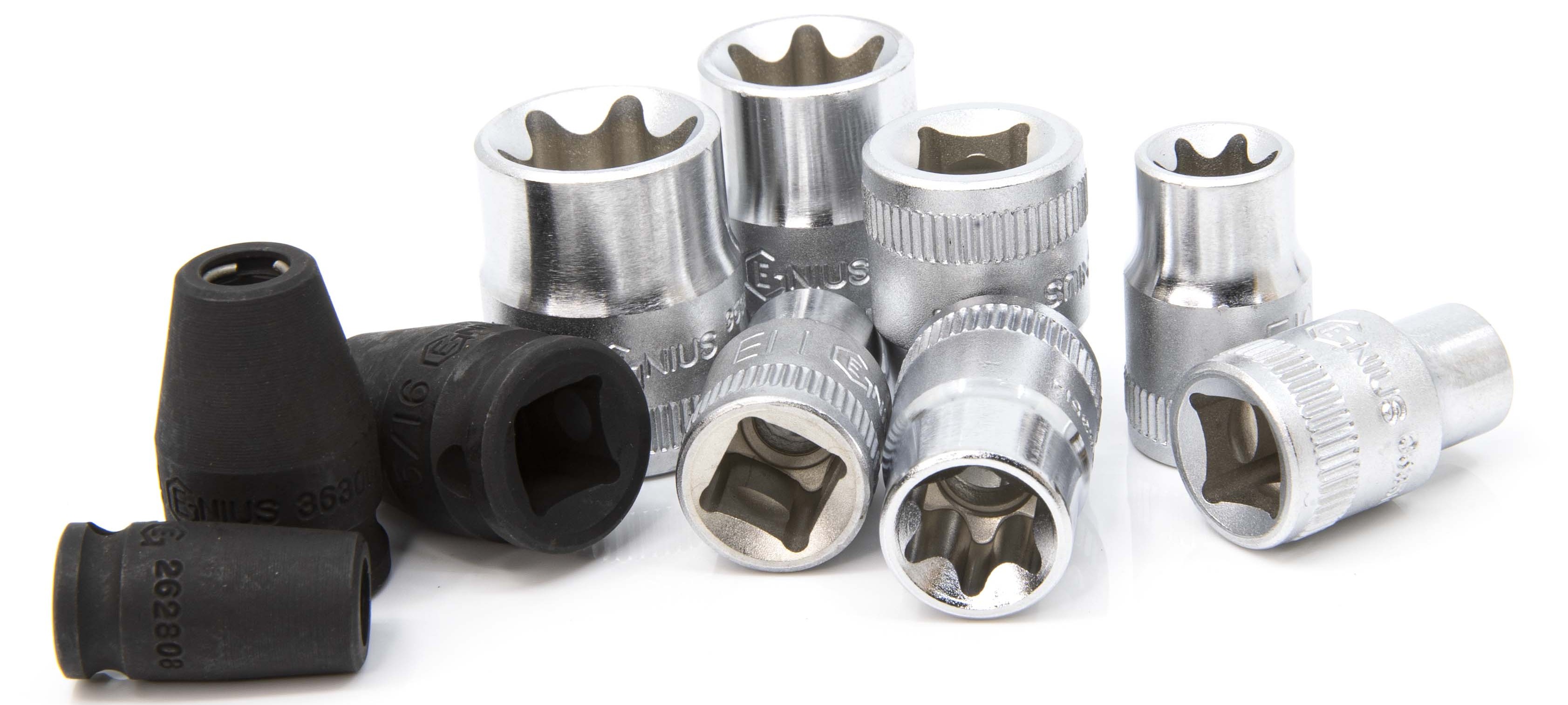
Tool steel matters. When you're applying force — especially with power tools — the composition of your sockets or wrenches can mean the difference between a clean job and a shattered socket. Two of the most common materials are Chrome Vanadium (CR-V) and Chrome Molybdenum (CR-MO). Here’s how they compare and when to choose each.
Chrome Vanadium (CR-V): Balanced Strength
CR-V is the go-to material for hand tools like combination wrenches, standard sockets, and screwdrivers. It offers a solid blend of hardness and toughness, with good corrosion resistance thanks to its chromium content. CR-V tools are affordable, durable, and great for general-purpose applications.
Chrome Molybdenum (CR-MO): Shock-Resistant for Impact
CR-MO is tougher and more ductile, making it ideal for tools exposed to sudden force — like impact sockets or pneumatic tool attachments. The molybdenum in CR-MO improves heat and fatigue resistance, which is why CR-MO tools are often thicker-walled and finished in black oxide.
-
Posted: August 12, 2025Categories: Genius Tools Articles
 Read more »
Sockets may look simple, but their geometry plays a critical role in how well they handle torque, access tight spots, and resist wear. Whether you're maintaining a fleet or just doing weekend wrenching, knowing when to reach for the right socket shape — deep, standard, thin wall, or impact — can extend tool life and improve job outcomes.
Standard vs. Deep Sockets
Standard sockets are great for most surface-access fasteners. Deep sockets provide extra reach for bolts with long protruding studs or recessed nuts. Deep sockets are often essential in suspension and transmission work.
Thin Wall Sockets
Thin wall sockets are designed for tight clearance situations — like alloy wheels or recessed engine components. They're usually used with care, as their reduced wall thickness makes them more vulnerable to cracking under heavy load.
Impact Sockets and Torque Load
Impact sockets are made from chrome molybdenum (CR-MO) for flexibility under high torque. Their thicker walls and dull black finish
-
Posted: August 06, 2025Categories: Genius Tools Articles
 Read more »
When working with hand or power tools, selecting the correct drive size is key to efficiency and safety. Drive size determines how much torque you can apply, how compact your setup is, and whether your tools will even fit the job. In this article, we’ll explore the most common drive sizes — 1/4", 3/8", 1/2", and beyond — and where each one shines in real-world mechanic work.
1/4" Drive – Precision for Tight Spaces
Best for low-torque, high-precision jobs, the 1/4" drive is perfect for electronics, dashboard components, and small engine assemblies. It excels in tight spaces and offers better control with lighter fasteners.
3/8" Drive – The Versatile Middle Ground
This is the go-to drive size for general automotive repairs. From valve covers to spark plugs and general under-hood work, a 3/8" drive provides the perfect blend of strength and accessibility.
1/2" Drive – Torque for Suspension & Wheels
When it comes to heavy-duty applications like lug nuts, suspension bolts, and drivetrain work,
-
Posted: July 24, 2025Categories: Genius Tools Articles
 Read more »
So you’ve decided to start wrenching on your car — great! Whether it’s an oil change, brake job, or suspension upgrade, having the right tools can make the difference between a smooth project and a frustrating afternoon. Here’s a list of the most essential, affordable tools every first-time home mechanic should own, plus some top picks from Genius Tools.
1. Socket Set (Metric & SAE)
You can’t do much on a car without a good socket set. Look for one that includes both shallow and deep sockets in metric and SAE sizes – Allowing you to tackle everything from engine bolts to suspension components with the right fit and reach..
Genius Tools Picks:
AC-359B 59 Piece ¼” Drive and 3/8” Drive Metric Socket Set
GS-244MS 44 Piece ¼” Dr. Metric & SAE Socket Set
2. Screwdriver Set
From interior panels to hose clamps, a good screwdriver set is a must. Make sure yours includes both flathead and Phillips sizes.
Genius Tools Pick:
TR-507S 7 Piece Slotted & Phillips Screwdriver Set3. Torque Wrench
Even for
-
Posted: September 10, 2024
 Read more »
A Comprehensive Guide to Hand Wrench Types and Uses: Choosing the Right Tool for Every Job
When it comes to assembling, repairing, or maintaining machinery, vehicles, or other hardware, the right tool can make all the difference. Hand wrenches are a staple in toolboxes worldwide, offering precision and torque where needed. With so many varieties available, understanding the specific use and advantage of each type is crucial for both professionals and DIY enthusiasts. In this guide, we'll delve into the different types of wrenches and their specific applications to help you make informed decisions.
- Open-End Wrenches
One of the most common types of wrenches, open-end wrenches, features U-shaped openings on one or both ends. These wrenches are ideal for turning nuts and bolts in tight spaces because their open-end design allows quick access without needing to slide the wrench over the entire bolt. This makes them efficient for jobs where fast adjustments are necessary, such as plumbing or
-
Posted: September 10, 2024
 Read more »
The Importance of Selecting the Right Pliers
Before diving into the types of pliers, it’s crucial to understand why selecting the correct type matters. Using the wrong pliers for a job can lead to:
- Damage to the workpiece: Incorrect pliers can scratch, warp, or damage materials.
- Reduced precision: Some tasks require fine control, which certain types of pliers provide better than others.
- Increased effort: Using the wrong tool can make your job harder and more time-consuming.
- Tool damage: Pliers that aren’t designed for a specific task can become worn, broken, or ineffective over time.
- Slip Joint Pliers (Combination Pliers)
Slip joint pliers are one of the most common types found in both professional and DIY toolboxes. They have an adjustable pivot point that allows the jaws to shift between two or more positions, making them versatile for gripping different sizes of objects.
Best for:
- Gripping and twisting bolts
- Holding flat or rounded objects
- General household repairs
Pro Tip: Look